
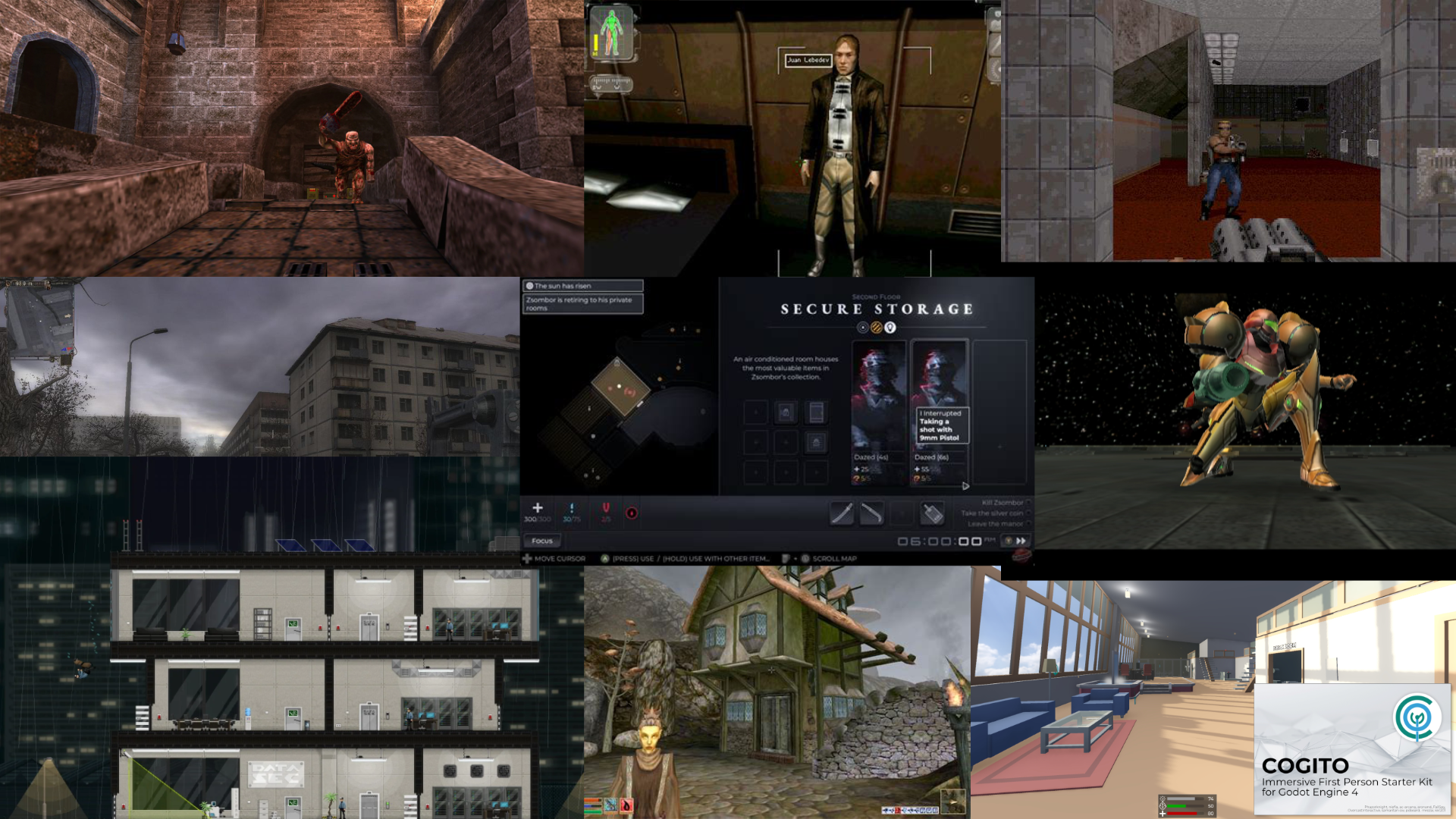
A lot of people have debated what defines an Immersive Sim – a lot of people are debating to this day.
Reading the Wikipedia entry for it, the definition seems equally vague and specific. It describes games that are systems driven, most notably systems that react to player actions. I’m not going to repeat every detail, but the concensus seems to be that Immersive Sims are usually first-person and heavily borrow from other genres – most notably role-playing games.
I’ve recently been asked what my definition of “Immersive Sim” is, specifically about if I see it more as a genre or a design philosophy. That’s a big question for a variety of reasons and I’ve pondered about this here and there before this question arose – after all I’ve started and I’m still working on what’s become known as an “Immersive Sim Game Template” for Godot Engine 4 called COGITO.
To answer that question, I reflected back over my personal fascination with Immersive Sims, and how it is hardlinked with my own gaming history and my love for video games themselves.
Mirrors, Toilets, Bulletholes
I’m going to age myself with this, but when I started playing video games, 3D was in it’s very early stages. Doom, Hexen, Heretic were probably the first FPS games I’ve tried, and the perspective shift to a player character “point-of-view” left an impression. While most games used the screen as a virtual game board similar to table top games, first-person-shooters turned the screen into a camera looking through someone else’s eyes. Quake and Dark Forces where next on my diet, and with them came the first time I truly felt like exploring a different world. I got lost in the various maps more times, but I loved feeling like I was there.
Yet there was something missing: While Quake had switches and buttons in it’s game world, the player would activate them by running into them or shooting them with a gun – neither of which felt very realistic.
Enter Duke Nuke‘em 3D: While technically not full 3D like Quake, Duke3D offered many details that made it more immersive: Interactions powered by a dedicated interaction button – the SPACE bar. While it was labeled as the “Open” key in game – used to open doors etc. it also let the player use it on many other objects, press buttons, flush toilets – even give money to strippers (hey, it was a Duke Nuke’em game after all). In addition to this interaction, the game’s environment was full of details that helped sell its “realness”, it’s tangibleness. Many objects could be destroyed, there was a bathroom mirror which actually reflected Duke, and when you shot at a wall, a bullet hole appeared and stayed!
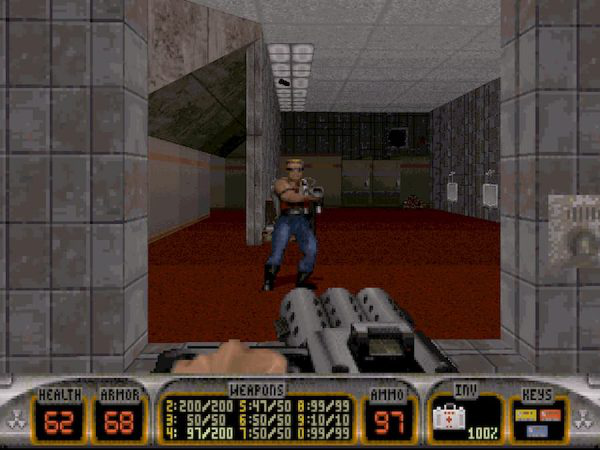
I couldn’t put it into words back then, but this is when games started to feel like they could represent worlds with a fidelity that was more than just numbers, words or pictures – it was a dance of action and reaction – it was immersive. The FPS masterpieces that followed, Unreal and Half-Life, kept adding even more details, from vast, imaginative environments to intricate NPC interactions – I was hooked to the possibilities.
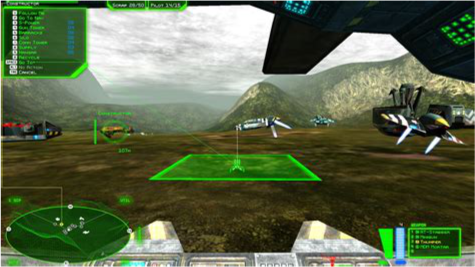
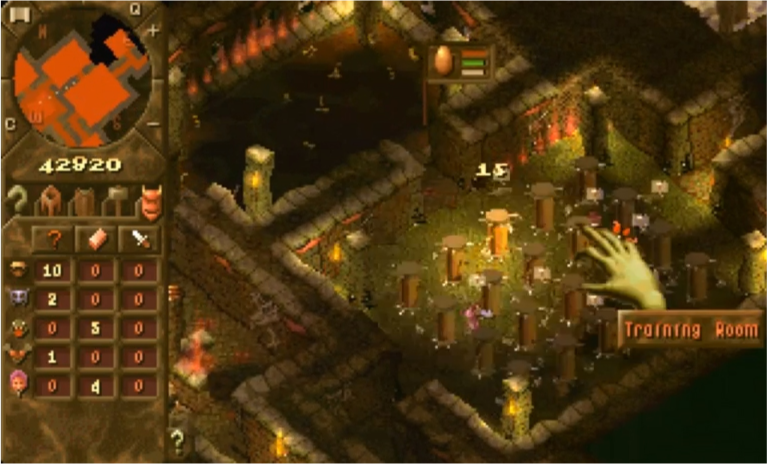
Games have always borrowed mechanics and genre conventions from each other. Using genre names as categories has been helpful for a while, but as with all media, I always found it better used as descriptors. I remember BattleZone (1998) as an early example of a “FPS-RTS”. The game blended first-person vehicle-based action with real-time-strategy in a very compelling mix, though definitely leaning more on the action-side. Similarily Dungeon Keeper allowed players to possess and play as the various creatures, yet it was still primarily a RTS/management sim. Genre’s have always been evolving, specializing, emerging. But then came Deus Ex.
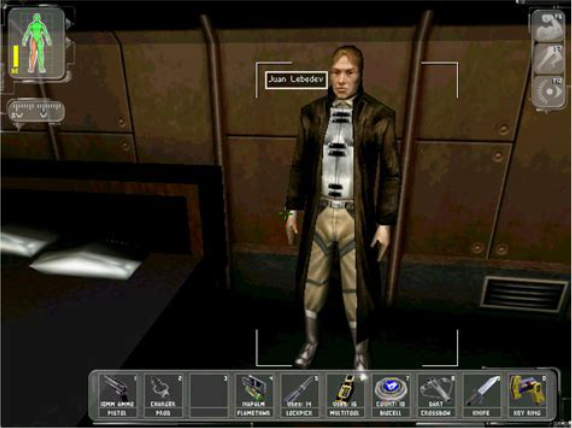
Deus Ex was straight up not a first-person shooter – shooting in Deus Ex actually felt a bit flat compared to Duke or Half-Life. But wow, was it immersive. You could have full on conversations with characters, and your dialogue choices mattered. You could just evade enemies and the world reacted to how you went through certain missions. You could even get cybernetic implants that would grant you new abilities! To add the cherry on top, Deus Ex’s story focused on government conspiracy at the same time that pop-culture phenomenon The X-Files was in the zeitgeist. While this game seemed laser-targeted at my teenage self, it also seemed so different than the majority of games at the time.
My “Immersive” Journey
I continued to love playing games mostly to get lost in other worlds and many games facilitated this in fantastic ways. Morrowind, Metroid Prime, STALKER, and many more were some of my absolute favorites from this era.
Between 2000 to about 2013, games took leaps that are hard to explain if you weren’t there to experience them. Immersion and fidelity was often used interchangebly when describing games – though the two are not the same. Improved graphical fidelity was used to dazzle the audience, the rise of “triple AAA” games and it’s representatives like Call of Duty, Uncharted and Halo showed how “cinematic” gaming had become.
Immersion in a gameplay sense did not evolve the same way. Deus Ex: Human Revolution offered not any fundamentally new mechanics compared to the original Deus Ex – and at this point, I’ve had played enough games to notice the lack of innovation.
Thankfully another movement happened around the same time: Indie Games started to push more into the mainstream, and they often focused on exploring very specific new mechanics. I was absolutely enamoured by FEZ and it’s plethora of secrets.
And then in 2013, I played Gunpoint.
Boiling down a genre
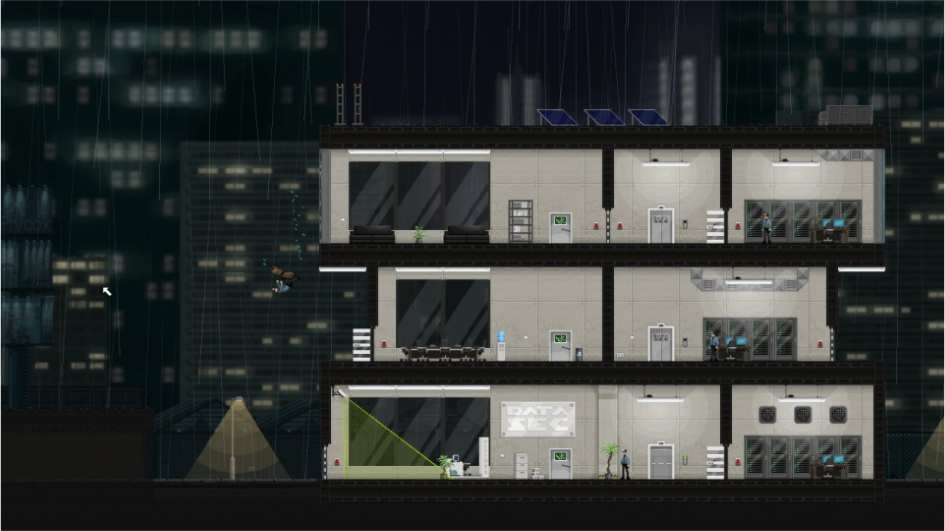
Gunpoint is a 2D indie title that puts you in the pants of a freelance spy named Conway, that finds himself caught in a conspiracy of rivaling weapon manufacturers. Caught in the pants literally as a special pair of trousers enables him to jump like a flea. Additionally, Conway – and by extension the player – has the ability to rewire a buildings electrical circuits, affecting lights, doors, elevators, cameras, etc.
In short, the game has underlying systems that impacts the game world – and the player has tools to affect said system in various ways. This isn’t just “press button to make thing happen” – I’d compare it more to setting up dominoes and hoping they fall just right when you push over the first one. And while the game describes itself as a “stealth-puzzle game”, which is a great descriptor, it as also absolutely an Immersive Sim. As a player you have to learn to predict guards reactions and movements, there’s multiple approaches and solutions to levels, and you can improvise with the tools at hand when things go south – all of this to make your brain light up thinking about the game worlds’ opportunities.
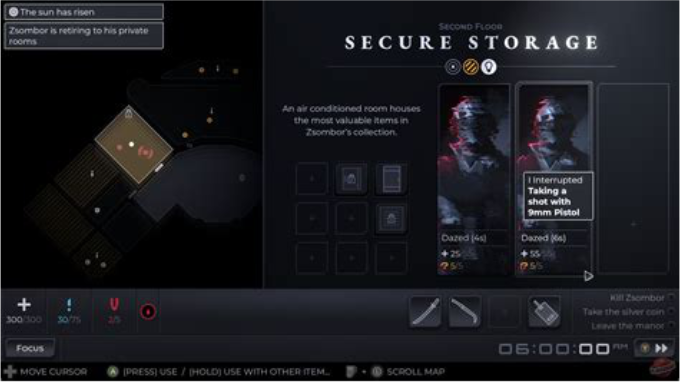
This week, Mike Bithell announced Vampirium 1997, and in his first gameplay video he describes the game as an “Immersive Sim boiled down to it’s core elements.” As it has just been announced, I haven’t played the game yet, but Vampirium 1997’s looks to take a similar approach. Not even 2D, I would describe Vampirium 1997 as purely UI – dialogue, numbers, menus and some decorative graphical elements like character portraits.
I’m pointing this out not to discredit Vampirium 1997 – just the opposite! While it’s presentation is to a degree abstract or representative, it’s still a game that gives player agency by letting them use (and abuse) a set of systems and rules that create an engaging possibility space.
It gives us a another new and refocused example of what the definition of Immersive Sim has always been.
Addendum
There’s one genre I couldn’t fit into the flow of this post that I feel compelled to discuss – the genre that’s commonly known as survival crafter. Starting with Minecraft, but followed by games like The Long Dark and Subnautica, the genre pushed hard in getting away from combat as a mechanic and refocus on other player activities – utilizing systems and a resource-economy that are heavily tied to the in-game environment. In my opinion, the survival crafter is an apple that fell from the Immersive Sim stem and started to grow into it’s own mighty tree.
Comments
Join the conversation on Bluesky
This is a good read. Best of luck the cogito.. lol… I imagine that might have saved me some time a few months back.